

Suburb Profile
Few Brisbane suburbs combine inner-city convenience, heritage character, riverside living and a lively dining scene quite like West End. The suburb has evolved rapidly, with traditional Queenslanders and older cottages now sitting alongside substantial apartment precincts, particularly along the Brisbane River. That diversity creates a wide range of buying opportunities, but it also makes careful property selection important: flood exposure, traffic, noise, heritage controls, body corporate matters and the quality of individual apartment developments can all significantly affect value. This West End suburb profile brings together current market data and practical local information to help buyers better understand the area.
West End is an inner-southern Brisbane suburb approximately two kilometres from the CBD, occupying a peninsula formed by the Brisbane River. It covers about 2.3 square kilometres and adjoins South Brisbane and Highgate Hill. Boundary Street is the suburb’s traditional commercial heart, while Montague Road and the riverside precinct have experienced substantial apartment and mixed-use redevelopment.
West End developed from an early farming district into a residential and commercial suburb during the nineteenth century; Brisbane City Council heritage records note that Boundary Street attracted residents and small businesses by the 1870s and became a major commercial strip by the late 1880s.
West End’s population grew rapidly from 9,474 in 2016 to 14,730 in 2021, an increase of 55.5%.
The suburb has a distinctly younger adult population: people aged 20–29 account for 22.2% of residents, and those aged 30–39 another 21.4%. Childless couples are the largest household group at 49.9%, compared with 34.5% for couples with children.
Owner-occupiers were 39.5% in 2021, reflecting the suburb’s large rental and apartment market.
The population is highly educated, with 41.0% holding bachelor’s degrees and 21.4% holding postgraduate qualifications. Professionals are the largest occupational group at 43.4%.
West End is one of Brisbane’s best-known dining and lifestyle precincts. Boundary Street and the surrounding streets feature a dense mix of cafes, restaurants, bars, specialty food stores and independent retailers, while the Davies Park markets remain a longstanding weekend attraction.
As the apartment population has grown, the Montague Road and riverside precincts have added more supermarkets, dining and everyday services. South Bank, the Queensland Cultural Centre and the dining and entertainment precincts of South Brisbane are also close by.
West End is particularly well suited to buyers who prefer alternatives to driving. Frequent buses connect the suburb to the CBD, South Brisbane and surrounding areas, while extensive walking and cycling paths run through the peninsula and along the river.
West End also has CityCat access; Brisbane City Council’s network includes services from West End, including a weekday peak Express CityCat to QUT Gardens Point.
West End has no railway station, but South Brisbane and South Bank stations are accessible from the eastern side of the suburb.
Buyers should consider traffic, parking availability and noise around Boundary Street, Vulture Street and Montague Road.
West End State School is in the suburb and is a major local primary school. For secondary schooling, catchments vary by address, and buyers should confirm the current Department of Education mapping before purchasing. The suburb is also close to a broad range of private schools in South Brisbane and surrounding inner-city areas, as well as tertiary institutions, including Griffith University’s South Bank campus and QUT Gardens Point across the river.
The entire Western and Southern borders of the suburb have fantastic walking and bike trails running along the Brisbane River with dog parks, barbeque facilities, rowing clubs and play grounds, public boat ramps and pontoons. Parks include Orleigh Park and Cranbrook Place. These spots are incredibly popular with the locals and the council has spent a lot of money developing these areas. Davies Park is another great spot with excellent public facilities and and sporting clubs, including a sports oval, skate park, league club, food markets and community gardens.
West End benefits from its immediate proximity to several of Brisbane’s largest inner-city employment precincts. The CBD is only a short distance away, while South Brisbane and South Bank are home to major employers across health, education, tourism, hospitality, arts and professional services.
Nearby institutions include the Queensland Cultural Centre, Griffith University’s South Bank campus, QUT Gardens Point and the Mater health precinct.
This employment accessibility supports both owner-occupier and rental demand.
The southern boundary of West End is highly sort after for is character homes. Medium and highrise developments dominate most of the suburb with riverside areas being most desirable.
Traffic noise can be an issue for properties close to major thoroughfares including Boundary Street, Vulture Street, Hardgrave Road & Montague Road. Buyers should check the Brisbane City Council Flood Maps as a large portion of the suburbs is susceptible to river flooding.

West End has an unusually apartment-heavy housing mix for Brisbane. Cotality records approximately 1,649 houses and 5,829 units. Average tenure is 12.5 years for houses and 8.3 years for units.
The detached housing stock includes traditional Queenslanders, workers’ cottages, renovated character homes and some newer infill, while the unit market ranges from older walk-up complexes to large contemporary apartment developments concentrated around Montague Road and the river.
West End is a complex market because detached houses and apartments operate as quite different segments. Heritage character, flood exposure, development intensity and the quality of individual apartment complexes can create substantial value differences between properties that appear similar on paper. A buyers agent familiar with West End can help identify suitable opportunities, assess comparable sales and complete the property-specific due diligence required before purchasing.
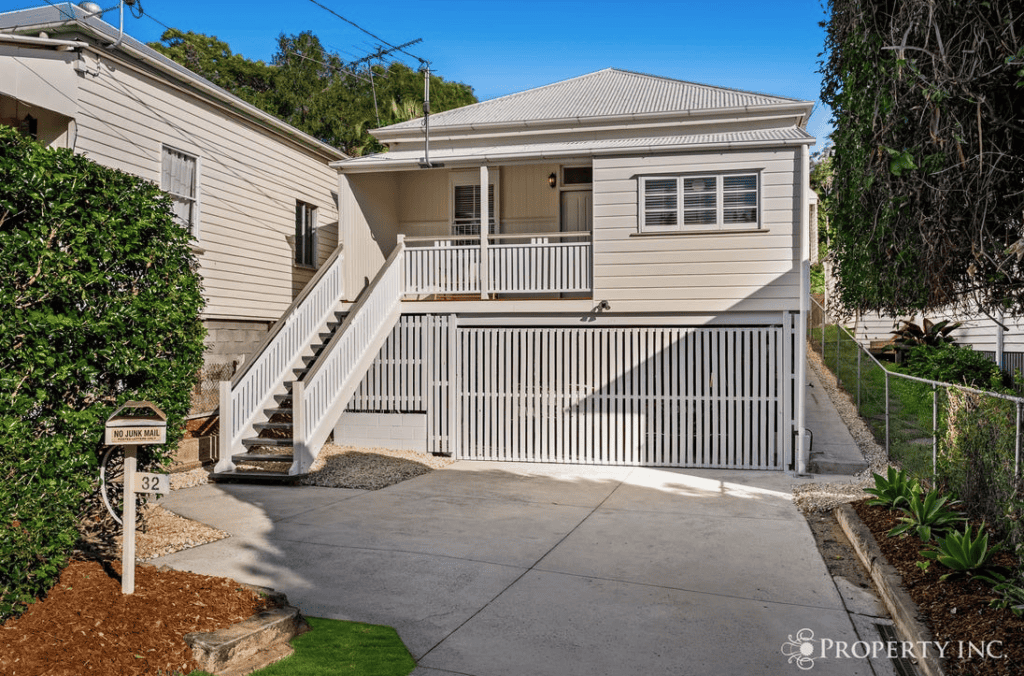
The median house price in West End is $2,150,343 (August 2026).
For example, a three-bedroom, two-bathroom house at 32 Archibald Street on 405 m² sold for $1,920,000 on 18 July 2026. View the 32 Archibald Street sale
The median unit price in West End is $1,065,015 (August 2026).
For example a two-bedroom, two-bathroom apartment at 80405/23 Mollison Street sold for $1,010,000 on 19 September 2026. View the 23 Mollison Street sale

Cotality recorded a median house value of $2,150,343 in August 2026, representing 13.4% annual growth. Over the longer term, house values have increased by approximately 92% since August 2020 and by around 27% over the past two years. The median house value rose sharply in early 2026, reaching a recent peak in March before easing by about 5% through to August. Cotality recorded 104 house sales over the rolling 12 months to June 2026.
The unit market has also performed strongly. The August 2026 median unit value was $1,065,015, up 18.1% over the year. Unit values have increased by 106% since August 2020 and by 33% over the past two years. The median reached a recent high in May 2026 before easing slightly, remaining above $1.06 million in August. Cotality recorded 276 unit sales over the rolling 12 months to June 2026, reflecting the much larger attached-dwelling market.
If you are considering buying in the West End, Your Property Hound can assist with property search, appraisal, due diligence and negotiation. Our assessment considers recent comparable sales and location-specific factors such as flood exposure, heritage and planning constraints, traffic and noise, land usability, and, for apartments, body corporate records, building condition and competing supply.
Market indicators show very low advertised house stock, at approximately 0.36%, with a vacancy rate of 0.62%. Gross rental yield is around 2.60%, while renters account for approximately 38% of houses. Data are insufficient to reliably report the house auction clearance rate, days on market, or vendor discount.
The unit market has more advertised stock, at approximately 1.66%, but remains relatively tight. Units record a vacancy rate of 1%, a gross rental yield of around 4.20% and approximately 66% renters. Reported days on market are 22 days, and vendor discount is -5%; auction clearance data is insufficient. The high renter proportion is consistent with West End’s large apartment sector and inner-city tenant base.
**Statistics are accurate for September 2026
West End offers a distinctive mix of an inner-city location, character housing, riverside amenities and a substantial apartment market. Its popularity doesn’t remove the need for careful selection: flood exposure, traffic, heritage constraints, redevelopment activity, and building-specific issues can materially affect both value and resale appeal. Your Property Hound can help assess comparable sales, investigate property and location risks, complete due diligence and negotiate the purchase on your behalf.
Find a better property at an even better price. Leave your property buying journey with our buyer’s agents – we’re Your Property Hounds.

