
Suburb Profile
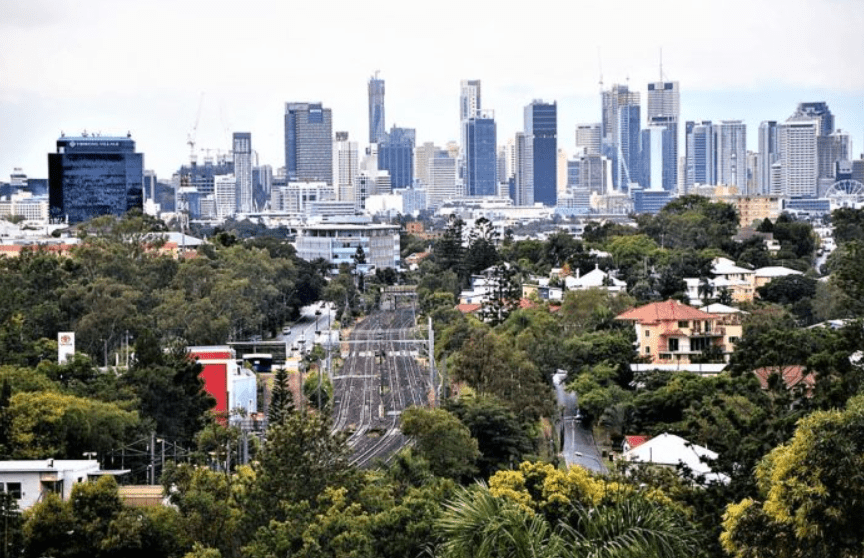
The Gap has long been one of Brisbane’s more popular family suburbs, particularly for buyers who want good schools, larger blocks and easy access to bushland without moving too far from the CBD. Tucked against the foothills of Mount Coot-tha and D’Aguilar National Park, it feels noticeably greener and more removed from the city than its location might suggest.
That sense of separation is a big part of The Gap’s appeal. It is one of those Brisbane suburbs where the bush feels like part of the neighbourhood rather than somewhere you need to drive an hour to visit. For many residents, weekends are more likely to involve walking, mountain biking, kids’ sport or a trip to Enoggera Reservoir than inner-city restaurants and nightlife.
At Your Property Hound, we regularly consider The Gap for family buyers because it offers a combination that’s hard to find closer to the city: predominantly detached housing, excellent schools, substantial parkland, and a strong owner-occupier community.
The compromises are equally important to understand. There is no railway station, most trips in and out of the suburb rely on a relatively small number of roads, peak-hour traffic can be frustrating, and the terrain varies considerably. Creek flooding, overland flow, bushfire risk, retaining walls and steep blocks can also affect individual properties.
This profile is designed to give buyers a practical overview of The Gap, including its housing, lifestyle, transport, schools and the factors we consider when assessing properties in the suburb.
The Gap is an established residential suburb approximately 10 kilometres northwest of the Brisbane CBD. It covers about 12.6 square kilometres and is bordered by extensive bushland associated with Mount Coot-tha and the D’Aguilar Range.
Despite its proximity to central Brisbane, The Gap has a distinctly suburban, semi-bushland character. Residential streets extend through valleys and across elevated ridges, with substantial differences in slope, outlook and vegetation from one part of the suburb to another.
This geography gives the suburb much of its character. As you travel west through Ashgrove and along Waterworks Road, the environment gradually becomes greener and more enclosed by hills. Some parts of The Gap feel surprisingly removed from inner Brisbane despite being only a relatively short distance from the CBD.
For many buyers, that is exactly the attraction. The flip side is that The Gap lacks the same interconnected road network, walkability, or rail access found in some other middle-ring suburbs.
The Gap’s population increased from 16,692 in 2016 to 17,318 in 2021, a 3.8% increase. Owner occupation is particularly high at 83.6%, up from 83% in 2016.
That high level of owner occupation, combined with an average house tenure of 15 years, helps explain why good family homes can be tightly held and why particular pockets of The Gap can have relatively limited turnover.
The Gap is bordered by the suburbs of Ashgrove, Bardon and Upper Kedron.
The Gap has a predominantly family demographic. Couples with children account for 52.5% of households, compared with 44.9% across Brisbane. Childless couples represent 32.7%, while single-parent households account for 13.9%.
This is also reflected in the suburb’s age profile. Children aged 10–19 are the largest age group at 17.2%, substantially above the Brisbane figure of 11.9%. Children aged 0–9 account for another 12.1%. Residents aged 40–49 are also strongly represented at 16%.
Household incomes are relatively high. Some 31.8% of households have annual incomes above $182,000, compared with 22.1% across Brisbane.
The population is also highly professional. Professionals account for 38.5% of employed residents, compared with 32% across Brisbane, while managers account for a further 17.2%.
These demographics fit closely with what we see in the local property market: The Gap is heavily oriented towards established owner-occupiers and families purchasing homes for the longer term.
The suburb also feels stable. It is common to meet people who grew up in The Gap, whose parents still live locally, or who return later when they want a larger home, a yard and access to schools. That helps give The Gap a more settled, community-oriented feel than suburbs with a more transient rental or apartment population.
The Gap is popular with families for its good schools, larger blocks, bushland setting and relative proximity to the CBD.
But choosing the right property requires more than comparing bedrooms and land size. Slope, drainage, flood and overland-flow risk, bushfire exposure, retaining walls, road noise and access to schools and transport can all affect value and liveability.
At Your Property Hound, we buy regularly in The Gap and help clients assess these risks, compare recent sales and establish a realistic appraisal range before making an offer.
If you are looking for a buyer’s agent in The Gap, read more about our Brisbane buyer’s agent service or contact Your Property Hound to discuss your search.
The Gap Village on Waterworks Road is the suburb’s main shopping centre and offers supermarkets, cafés, specialty shops, and everyday services.
For most residents, the local shopping is sufficient for groceries, medical services, takeaway food, coffee and other day-to-day needs. Additional neighbourhood shops and cafés are scattered through the suburb, including along Waterworks Road.
Larger retail and entertainment precincts are available in surrounding areas such as Ashgrove, Indooroopilly and Chermside.
The Gap is not a suburb buyers generally choose for a large restaurant or nightlife scene. Its appeal is more about family amenity, outdoor recreation and having everyday services available locally while remaining reasonably close to Brisbane’s inner suburbs.
For a wider choice of restaurants, cafés and entertainment, residents generally travel towards Ashgrove, Paddington, Red Hill and the inner city.
This is an important lifestyle distinction. If your ideal weekend involves walking between cafés, restaurants and bars, there are stronger options closer to central Brisbane. If it involves kids’ sport, walking the dog, mountain biking, swimming at Enoggera Reservoir or spending time in a backyard, The Gap starts to make considerably more sense.
Transport is one of the more important considerations for buyers looking at The Gap.
There is no railway station, so public transport is predominantly bus-based. Convenient bus services connect The Gap with the Brisbane CBD via Waterworks Road, and park-and-ride facilities are available at Illowra Street and near Enoggera Reservoir.
For commuters travelling into the city, the bus network is one of the suburb’s strengths. During peak periods, buses can use the T2 transit lanes along Waterworks Road, which can make public transport quicker and more predictable than driving through peak-hour traffic.
Where you live within The Gap still makes a big difference to how convenient public transport is. Homes closer to Waterworks Road or a frequent bus route generally have easier access to the CBD, while properties deeper within the suburb may involve a longer walk or drive to a bus stop or park-and-ride facility.
The suburb’s hilly terrain is also worth keeping in mind. A property may look close to a bus stop on a map, but the walk can feel quite different when it involves a steep hill. This can be particularly relevant for teenagers travelling independently, older residents or households hoping to rely less on a car.
By car, Waterworks Road provides the main route towards Ashgrove and the inner city. Peak-hour congestion is one of the more common drawbacks associated with living in The Gap, and travel times can vary significantly at busy times.
One of the quirks of The Gap is that the geography that creates its quiet, enclosed character also limits the number of easy routes in and out. A large proportion of city-bound traffic is funnelled towards Waterworks Road.
Settlement Road provides another connection towards Keperra and Brisbane’s north-west, which can be useful for residents travelling towards Ferny Grove and surrounding suburbs.
Buyers should therefore consider more than the straight-line distance to the CBD. It is worth checking the commute at the time of day you will actually travel, and considering how close the property is to Waterworks Road, bus stops, park-and-ride facilities, schools and everyday shopping.
Schools are a major reason families consider The Gap.
The suburb is home to The Gap State School, Payne Road State School, Hilder Road State School, and The Gap State High School, giving families several local state-school options.
The Gap State High School is particularly important to the suburb’s appeal for families who want to remain in the same area for both primary and secondary schooling.
Local sentiment towards the schools is generally very positive, and education is a recurring reason families cte when explaining why they moved to The Gap or stayed in the suburb long term.
Private schooling options are also within a reasonable travelling distance in Brisbane’s inner north and western suburbs.
School catchments should always be checked against the individual property address rather than assumed from the suburb name, particularly where access to a specific school is an important part of the purchasing decision.
Different parts of The Gap feed into different primary schools, so two houses only a short distance apart may not provide the same school options.
Practical considerations also matter around school locations. Traffic around some schools can become noticeably busier at drop-off and pick-up times, which may matter if you are considering a property immediately surrounding a school or on one of the main approach roads.
Access to green space is one of The Gap’s defining features.
The suburb has 31 parks covering approximately 10.8% of its 12.6 square kilometres.
Beyond its formal parks, The Gap sits alongside some of Brisbane’s most significant bushland. Its position against Mount Coot-tha and the D’Aguilar Range gives residents access to walking tracks, mountain-bike trails, bushland reserves and extensive natural areas.
Enoggera Reservoir and Walkabout Creek Discovery Centre are major nearby recreational attractions, offering opportunities for walking, swimming, kayaking, picnics, and wildlife experiences.
For outdoor-oriented buyers, this is more than a feature to mention in a suburb brochure. The bushland can genuinely become part of everyday life. Residents can walk through substantial areas of bushland or swim at the reservoir without leaving the area.
Numerous local parks, playgrounds, sporting fields, and creek corridors are also distributed throughout the suburb.
The setting is a major attraction, but it introduces additional due-diligence considerations.
Properties adjoining or close to heavily vegetated areas may require investigation of bushfire overlays, vegetation controls, tree maintenance and insurance implications. Creek corridors and lower-lying areas can also be affected by flooding or overland flow.
Storm exposure and large established trees are another consideration in particularly leafy pockets.
The aim is not to avoid properties near bushland altogether. Some of The Gap’s most appealing homes occupy these positions. It’s important to understand the risks and maintenance obligations that come with them before purchasing.
The Gap is overwhelmingly residential and does not contain a major employment precinct.
Many residents commute to the Brisbane CBD and inner suburbs for work, consistent with the suburb’s high proportion of professional and managerial occupations.
The suburb also has local employment in schools, retail, healthcare, and community services, while major employment precincts in the CBD, Herston, and surrounding inner suburbs remain reasonably accessible.
The Gap is not a uniform property market, and the quality of an individual position can significantly affect buyer demand.
Quiet residential streets with usable blocks, attractive outlooks and convenient access to schools, parks and public transport tend to have broad family appeal.
Renovated homes that provide good indoor-outdoor living can be particularly popular
Elevated positions can offer attractive outlooks, breezes and greater privacy, but buyers need to distinguish between elevation and excessive slope.
Some blocks are steep enough to significantly reduce usable yard space or make extensions, pools, retaining walls and future renovations more expensive.
This is one of the most important things to appreciate when looking at The Gap online. Two properties with similar land areas can offer very different levels of usable space.
The same applies to walkability. A school, shop, or bus stop that appears to be only 800 metres can feel considerably further if most of the way on a map c trip is uphill.
At the other end of the spectrum, lower-lying properties near creek systems require careful investigation of flood and overland flow.
Flood risk is highly property-specific. It would be misleading to describe The Gap simply as either a flood-prone or flood-free suburb. Elevated houses can have very different risk profiles from homes closer to waterways and drainage corridors.
Severe weather can also affect access routes even where an individual property itself remains unaffected.
Bushland-adjacent properties can offer privacy and attractive outlooks but may carry additional bushfire, vegetation, maintenance and insurance considerations.
Road exposure is another important variable. Homes on or very close to Waterworks Road and other busy routes generally need to be assessed differently from comparable homes in quiet residential streets.
The Gap therefore rewards property-specific due diligence. Two houses only a few streets apart can have substantially different risk profiles, usability and buyer appeal.
This is where using an experienced buyer’s agent in The Gap can be particularly useful. The suburb looks relatively straightforward on a map, but slope, road position, drainage, school access and bushland exposure can change significantly over short distances.
Detached housing overwhelmingly dominates The Gap.
There are approximately 5,920 houses compared with only 562 units.
Houses have an average tenure of 15 years, compared with 10.5 years for units.
Housing includes post-war homes, brick houses from later periods, architecturally designed homes and a growing number of extensively renovated or rebuilt properties.
Block sizes are generally more generous than in many suburbs closer to the CBD, although land usability varies substantially because of the suburb’s topography.
Townhouses and other attached properties represent a relatively small part of the market. Keep this in mind when interpreting unit statistics or trying to establish value for an individual townhouse.
For house buyers, we pay particular attention to:
These factors can make a substantial difference to both current value and future resale appeal.
The median house price in The Gap is $1,423,403 (August 2026).
For Example – 59 Bernarra Street, The Gap

The median unit price in The Gap is $1,101,810 (August 2026).
For Example – 19/1 Glenquarie Place, The Gap

The Gap has recorded strong long-term price growth, although the market has become more subdued during 2026.
The median house value reached $1,423,403 in August 2026, up 2.6% year on year. This compares with much stronger increases of 9.9% over the year to August 2025 and 19.8% over the previous 12 months. Since August 2020, the median house value has risen by approximately 94%.
The unit and townhouse market is considerably smaller but has followed a similar pattern of strong longer-term growth. The median unit value was $1,101,810 in August 2026, up 4.9% over the year. This followed annual increases of 10.8% and 20.4% in the preceding two years.
Since August 2020, the median unit value has increased by 104%.
Insufficient data points make it difficult to reliably report days on market, vendor discounts, auction clearance rates, or rental vacancy rates for units.
Statistics are accurate for August 2026.
These figures point to relatively limited supply, particularly given The Gap’s large and tightly held detached-housing market.
The combination of an 83.6% owner-occupation rate and average house tenure of 15 years also helps explain why good-quality family homes in preferred locations can attract strong competition when they become available.
That competition is not necessarily uniform across the suburb. Buyers tend to distinguish between well-renovated homes on usable blocks in quiet locations and properties where slope, road exposure, drainage or other issues create compromises. As a result, looking only at the suburb median can obscure meaningful differences in what buyers are prepared to pay.
The Gap is a strong option for families wanting space, good schools, established neighbourhoods and easy access to bushland while remaining relatively close to the Brisbane CBD.
But it is also a suburb where the individual property matters enormously.
Slope, retaining walls, drainage, flood and overland-flow risk, bushfire exposure, road position and access to schools or public transport can vary significantly from one street to the next. A property that looks ideal online can come with compromises that are not immediately obvious.
That is where an experienced buyer’s agent in The Gap can add real value. At Your Property Hound, we buy regularly in The Gap and understand the local differences that can affect both liveability and resale appeal.
We help buyers assess the property as well as the suburb — comparing recent sales, establishing a realistic appraisal range and identifying risks before they become expensive surprises.
For the right buyer, The Gap offers a combination of greenery, family amenity and space that is increasingly difficult to find this close to the city.
If you are considering buying in The Gap, contact Your Property Hound to discuss your brief. We can help you identify the right streets and properties, avoid the common traps and buy with a clear understanding of what the property is really worth.
Find a better property at an even better price. Leave your property buying journey with our buyer’s agents – we’re Your Property Hounds.