
Buying a house in Brisbane can be surprisingly frustrating if you’re used to the Sydney or Melbourne markets.
The homes look different. Sales campaigns run differently. Price guides can be vague or missing. Offer deadlines are sometimes brought forward. Auctions can sell before auction day. And open homes may still go ahead even when a property is already under contract.
For interstate buyers, this can feel confusing – and at times, unfair. You may be trying to make a major financial decision based on online photos, limited pricing information and selling-agent commentary, while competing against locals who understand the suburb, the housing style and the pace of the market.
Brisbane also carries risks that are easy to underestimate from a distance. Flooding, overland flow, termites, timber decay, non-legal-height rooms, overlays, easements, and poor-quality renovations can all have a major impact on value. Similar houses in the same neighbourhood can vary greatly in value and risk once thoroughly investigated.
This guide explains how buying a house in Brisbane differs from buying in Sydney, Melbourne and other southern capitals – and what buyers should understand before making an offer.
Brisbane Is Not Just a Smaller Version of Sydney or Melbourne.
Many interstate buyers arrive in Brisbane with habits and assumptions formed in Sydney or Melbourne. That can be risky.
Brisbane has its own property styles, sales processes, due diligence issues and buyer behaviour. The suburb itself – and when it was developed – often determines the type of house you’re likely to find.
In Sydney and Melbourne, buyers may be more familiar with brick homes, terraces, semis, apartment-heavy suburbs and highly structured auction campaigns.
Brisbane Housing Stock Is Very Different
Inner-city Brisbane: Queenslanders and timber character homes
Many inner-city Brisbane suburbs are dominated by older timber homes, including colonial homes, Queenslanders, workers cottages and other character houses. These are common in areas such as Paddington, Red Hill, New Farm, Wilston, Wooloowin, Auchenflower, Ashgrove and Bulimba.
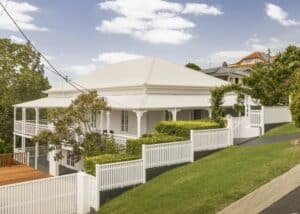
A lot of these homes were built in the early 1900s through to the 1930s. They can be beautiful, highly sought-after and full of character, but they also require careful due diligence.
Buyers should pay attention to stump condition, termite activity or risk, timber decay, roof and gutter condition, asbestos in later additions, unapproved or non-compliant renovations, drainage issues, character or heritage restrictions and likely ongoing maintenance costs.
For buyers used to brick homes in Sydney or Melbourne, older Brisbane timber homes require a different mindset. The charm is real, but so is the upkeep.
Middle-ring Brisbane: post-war weatherboard homes
Many middle-ring Brisbane suburbs were developed after World War II. These areas often contain post-war timber weatherboard homes.
You’ll see a lot of them in suburbs such as Stafford, Kedron, Chermside West, Everton Park, Mitchelton, Moorooka, Holland Park and Mount Gravatt East.
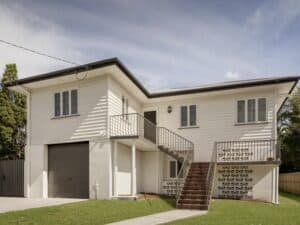
Post-war homes can offer good land value and solid renovation potential, but they need to be checked carefully. Many have been altered several times – extensions, deck additions, enclosed lower levels or DIY renovations. Some have been renovated properly; others have not.
Key issues include whether building work was approved, the condition of any stumps, termite management, drainage around the house, roof age, asbestos risk, old wiring or plumbing, retaining walls and whether downstairs areas meet legal height.
These homes can be excellent purchases, but they are not always straightforward.
Outer and later-developed suburbs: more brick homes
Brick homes became more common in Brisbane from the 1970s and 1980s. Buyers are more likely to find brick houses in suburbs further from the CBD, often 10 kilometres or more from the city.
These include suburbs such as McDowall, Albany Creek, Aspley, Carseldine, Jindalee, Sunnybank Hills, The Gap.
For buyers from Sydney or Melbourne, brick homes can feel more familiar. However, the fundamentals still matter: suburb quality, street appeal, land size, flood and overland flow risk, school catchment and renovation quality.
A brick house isn’t automatically a better purchase than a timber home. It simply comes with a different set of considerations.
Newer infill housing
Brisbane is also seeing more contemporary infill housing in established suburbs – knockdown rebuilds, small-lot homes, townhouses and modern homes on subdivided blocks.
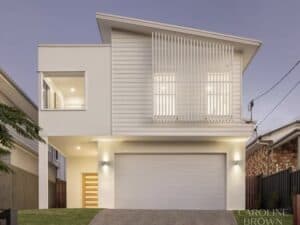
These properties can be appealing because they’re newer, relatively low-maintenance and easier to understand than older timber homes. Buyers should still look closely at land size, setbacks, easements, neighbouring development, flood and overland flow risk, natural light, car accommodation, privacy, and long-term resale appeal.
It’s also worth considering whether the build quality and layout genuinely match the price. Newer doesn’t always mean better, particularly if the property sits awkwardly on the block, has a compromised design or a very small land component.
Timber Homes Need Careful Building and Pest Due Diligence
Brisbane’s sub-tropical climate and timber housing stock make building and pest inspections especially important.
Termites and timber decay are genuine concerns, particularly in older Queenslanders, post-war homes, and properties with drainage or ventilation issues. A building and pest report should not be treated as a box-ticking exercise.
Buyers need to understand the difference between minor maintenance items (typical for the home’s age and style) and more serious structural concerns that could lead to major issues down the track.
A report on an older timber home may look alarming if you’re not used to this type of property. Not every defect means the house is a poor purchase. But some issues can be expensive and should not be brushed aside.
Local experience helps. A buyer who understands Brisbane housing stock can better judge whether issues are normal, manageable or a reason to walk away.
High-Set Homes and “Legal Height” Can Be Misleading
Many brisbane homes are built on stumps. This creates space beneath the house for storage, parking, and laundry.
One of the most common traps for buyers is assuming all downstairs space can be valued the same way as approved living space.
In Brisbane, many lower-level areas are not of legal height. This usually means the ceiling height is less than the minimum required for habitable rooms, commonly 2.4 metres.
This affects how properties are advertised. Rooms that are not legal height generally shouldn’t be marketed as bedrooms. Instead, you may see them described as a rumpus room, multipurpose room, utility room, teenage retreat, additional living area or storage.
These spaces can still be very useful, but buyers should be careful not to overvalue them. A downstairs “teenage retreat” with low ceilings is not the same as a fully legal bedroom and living area. This can also affect bank valuations, future renovation plans, termite risk, and resale value.
Brisbane Properties Can Sell Faster Than Buyers Expect
Another major difference when buying a house in Brisbane is the way properties are sold.
Sydney and Melbourne buyers are often used to auction campaigns with clear timelines. By comparison, auctions are much less common in Brisbane, with most houses sold by negotiation (private treaty).
That means you can’t rely on a neat three or four-week campaign. A property may be listed, opened once, receive strong interest and sell quickly.
For a more detailed explanation of how Brisbane properties are advertised and sold, including Offers Over, private treaty and auction campaigns, see our Brisbane property sale methods guide.
The best properties sometimes sell before many buyers have had time to properly assess them.
Offer deadlines should not be relied upon
One of the more frustrating parts of buying in Brisbane is that advertised offer deadlines are not always honoured.
A listing may say “offers closing Monday” or “best offers by 5 pm”, but that doesn’t guarantee the seller will wait. If a strong offer is submitted earlier, the seller may accept it before the deadline.
If you are genuinely interested in a property, you need to be ready to act. That means having your finance position clear, a solicitor or conveyancer lined up, and your due diligence completed quickly.
Waiting for the advertised deadline can mean missing out.
Auction properties can also be sold before the auction.
The same principle applies to auctions. Just because a property is scheduled for auction does not mean it will reach auction day. In Brisbane, it’s common for agents to encourage pre-auction offers.
If the seller receives an offer they’re happy with, the property may sell beforehand.
Serious buyers should inform the sales agent of their interest as soon as possible to stay updated if the sale timeline changes.
Open homes may continue while a property is under contract
Another frustration for Brisbane buyers is that advertised open homes do not always mean a property is still fully available.
Some agents continue to hold inspections while a property is under contract, particularly before the contract becomes unconditional. Buyers may inspect a property, become excited about it and only later discover that another buyer is already under contract.
Before getting too invested in a property, ask the agent directly whether the home is still available, whether any offers have been accepted, and whether a contract is already in place.
Price Guides Can Be Less Transparent in Brisbane
Many Brisbane listings are advertised without a clear price guide. Common methods include For Sale, Offers Over, By Negotiation, Contact Agent and Expressions of Interest.
For buyers from Sydney and Melbourne, this can be challenging. An “offers over” price does not necessarily reflect the seller’s true expectation. It may simply be a strategy to generate interest.
Online estimates can also be unreliable. Brisbane house values can vary significantly based on factors that are not always obvious online, including flood and overland flow risk, street position, land slope, school catchment, legal-height areas, renovation quality, character overlays, zoning, easements and proximity to main roads or social housing.
Comparable sales are essential, but they need to be interpreted carefully. Two houses in the same suburb can have very different values if one is flood-affected, poorly renovated or has non-legal-height living areas.
Realestate.com.au Is More Dominant in Brisbane
Property portals differ regionally. In Brisbane, realestate.com.au is the primary platform for most buyers, while Domain is less dominant than in Sydney and Melbourne.
Buyers from southern capitals might check Domain more often, risking missed properties or incomplete market coverage if over-relied upon.
Serious buyers should also use email alerts, agent databases, and access off-market listings. While online platforms are helpful, they don’t reveal the entire market, as some properties sell quickly, quietly, or before they’re fully listed online.
Flood Risk in Brisbane is a significant concern.
Flood risk can vary from street to street. Two homes in the same suburb may have completely different risk profiles. One may be unaffected, while another may be exposed to river flooding, creek flooding or overland flow.
Buyers should check Brisbane City Council flood mapping, FloodWise Property Reports where relevant, overland flow paths, stormwater issues, current or proposed habitable floor levels, past flood history and insurance availability and premiums.
Flood risk can affect value, liveability, renovation plans, finance, insurance and resale.
It’s also important not to rely only on whether the house looks elevated or whether the agent says it “didn’t flood”. Proper mapping, council records and insurance checks are essential.
Other Brisbane Due Diligence Checks Buyers Should Complete
Flooding is important, but it’s not the only issue. When buying a house in Brisbane, buyers should also consider easements, underground services (sewer and stormwater), zoning and overlays, nearby development applications, school catchments, road widening or transport corridors, nearby social housing, aircraft, road or rail noise, retaining walls, slope and drainage, building approvals for renovations, pool safety compliance (if relevant), smoke alarm compliance, and insurance costs.
Many of these checks are council-specific, which is why local knowledge matters.
Use a Local Queensland Conveyancer or Solicitor
The contract process in Queensland is different from NSW and Victoria.
When buying a house in Brisbane, it’s best to use a solicitor or conveyancer who is familiar with Queensland property contracts and local council searches. Ideally, they should also understand the council area where you are buying.
Purchase Costs Are State-Based
Buyers moving from Sydney or Melbourne should remember that purchase costs are state-based.
Queensland uses the term transfer duty, although many buyers still call it stamp duty. Transfer duty applies when you buy or transfer property in Queensland.
Land tax is also state-based. In Queensland, land tax liability is based on land owned at midnight on 30 June each year, and the rate depends on the type of owner.
Do not assume the costs will be the same as NSW or Victoria. Before making an offer, buyers should estimate transfer duty, legal fees, inspection costs, insurance and any relevant land tax implications.
Interstate Buyers Can Be at a Disadvantage
Buyers from Sydney and Melbourne can be attractive to Brisbane selling agents. They may have larger budgets, strong borrowing capacity and a different view of value.
Unfortunately, they can also be vulnerable.
A selling agent may realise that an interstate buyer is unfamiliar with Brisbane suburb hierarchy, flood risk, local construction types, legal height issues, market pricing, how quickly properties sell, local negotiation practices and building and pest risks.
Many agents are professional and helpful, but buyers need to remember that the selling agent works for the seller, not the buyer.
When you’re relying on online photos, agent commentary and a quick weekend inspection, it’s easy to miss things that local buyers would notice immediately.
Online Photos Do Not Tell the Whole Story
This is one of the biggest traps when buying a house in Brisbane from interstate. A property can look great online but feel very different in person.
Photos may not show steep driveways, poor natural light, awkward layouts, low ceiling heights, traffic noise, neighbouring properties, poor street appeal, damp or musty areas, signs of neglect, drainage issues, compromised privacy, nearby social housing, renovation quality or how the house actually sits on the block.
This is why in-person inspections matter.
For interstate, regional, and overseas buyers, one of the major advantages of using a local Brisbane buyer’s agent is the ability to inspect properties in person (and at short notice if required). A good buyer’s agent can often identify issues that are not obvious from photos, floor plans or agent descriptions.
They can also tell you when a property is better than it looks online – which can be just as valuable.
Why a Local Brisbane Buyer’s Agent Can Help
A buyer’s agent can be particularly useful when buying a house in Brisbane, especially if you’re not familiar with the local market.
The keyword is local.
A buyer’s agent based in Brisbane should understand the suburbs, housing styles, flood risks, agent behaviour, pricing patterns and local due diligence issues. A buyer’s agent based in Sydney or Melbourne may understand property in general, but may not have the detailed knowledge needed to properly assess Brisbane homes.
A local Brisbane buyer’s agent can:
- inspect properties in person;
- assess value using local comparable sales;
- identify flood and overland flow risks;
- understand legal-height issues;
- recognise termite and timber maintenance concerns;
- check suburb and street quality;
- identify compromised properties;
- deal effectively with local selling agents;
- move quickly when properties may sell before deadline; and
- coordinate building and pest inspections and other due diligence.
For interstate and overseas buyers, this can be the difference between making a confident decision and relying on marketing photos.
For local Brisbane buyers, a buyer’s agent can still add value by offering a second opinion, assessing value, highlighting risks and negotiating on your behalf.
Final Thoughts
Buying a house in Brisbane can be very rewarding, but it does require local understanding.
The city’s housing stock, sales process, contract conditions, and due diligence risks differ from those in Sydney and Melbourne. Timber homes, flood and overland flow risk, legal-height issues, vague price guides, fast private treaty negotiations and state-based costs can all catch buyers by surprise.
The best approach is to be prepared before you find the right property. Understand the market, use Brisbane-based professionals, complete proper due diligence and avoid relying solely on online listings or sales agent commentary.
If you’re buying a house in Brisbane from interstate, regional Queensland or overseas, local support can be especially valuable. The right advice can help you understand what you’re really buying – not just what the photos show.
Contact us today if you’d like practical, independent guidance before you buy.