
Suburb Profile
Clayfield is one of those Brisbane suburbs where buyers need to look beyond the suburb name. The housing mix is broad, values can shift markedly between streets, and issues such as aircraft noise, rail noise, flooding and character controls can materially affect an individual property. Our buyers agent Clayfield guide draws on our experience as Brisbane buyer’s agents assessing property across the inner north and sets out the key things to consider before buying here.
Clayfield is an established inner-north Brisbane suburb about 7.4km by road from the CBD. Covering roughly 2.8 square kilometres, it adjoins Nundah, Hendra, Ascot, Albion, Wooloowin and Kalinga. The suburb includes the Eagle Junction locality and has an unusually broad mix of character houses, prestige homes and apartments.
The suburb’s name is linked to the clay deposits and former brickmaking industry around Albion and Clayfield. Rail and tram connections encouraged residential development, and by the late nineteenth century Clayfield had become one of Brisbane’s better-known prestige residential areas.
Clayfield had 10,897 residents at the 2021 Census, up 3.2% from 10,555 in 2016. The largest age group is 30–39 years. Childless couples account for 42.1% of households and couples with children 41.1%. Owner-occupiers represented 55.0% of homes in 2021, up from 52.4% in 2016. Professional occupations are particularly common, accounting for 34.8% of employment.
Local shopping and dining is concentrated along Sandgate Road and around Junction Road. Buyers also have easy access to cafés, restaurants and retail in nearby Ascot, Hendra, Nundah and Albion, as well as Racecourse Road, Portside Wharf and Hamilton, and larger shopping centres across Brisbane’s northside.
Clayfield has good public transport and road connections. Clayfield and Eagle Junction railway stations provide services towards the CBD and northern suburbs, while buses run along major roads including Sandgate Road. Road access to Brisbane Airport and the Airport Link tunnel network is also convenient.
School access is an important drawcard for many Clayfield buyers. Local and nearby schools include Eagle Junction State School, Aviation High, Clayfield College, St Rita’s College and St Agatha’s Primary School. State-school catchments can change from one part of the suburb to another, particularly near the boundaries, so buyers should check the catchment for the individual property before making an offer.
Clayfield has relatively little parkland within its boundaries, but Kalinga Park and the Kedron Brook bikeway sit immediately to the north-west and provide extensive space for walking, cycling and recreation. The Cotality suburb report records four parks within Clayfield, covering about 1.6% of the suburb.
The quality of housing and the feel of individual streets can vary considerably. Buyers should check traffic and rail noise, aircraft noise, character or heritage controls, overland-flow and flood mapping, and the condition of older character homes. These issues can affect both what a property is worth today and how easy it may be to resell later.
Clayfield has a genuinely mixed housing market. Cotality records about 2,130 houses and 3,549 units, meaning attached housing makes up a significant share of local stock. Houses range from traditional Queenslanders and early character homes to renovated prestige properties and newer builds. Units range from older walk-up blocks to larger contemporary apartments. Average ownership periods are long at about 13.0 years for houses and 11.5 years for units, which helps explain why good-quality houses can be tightly held.
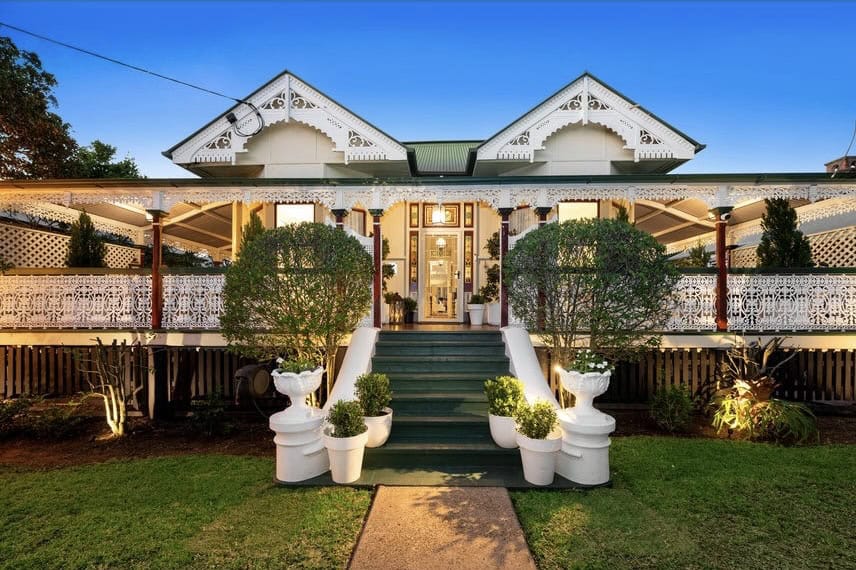
Cotality recorded a median house value of $2,218,528 in July 2026. Around this level, buyers are generally looking at established family homes, but land size, renovation quality, street position and character features can create large differences between individual sales.
For example, 20 Norman Parade, Clayfield — a four-bedroom, three-bathroom home with four-car accommodation on 814m² — sold for $2,150,000 on 3 August 2026.
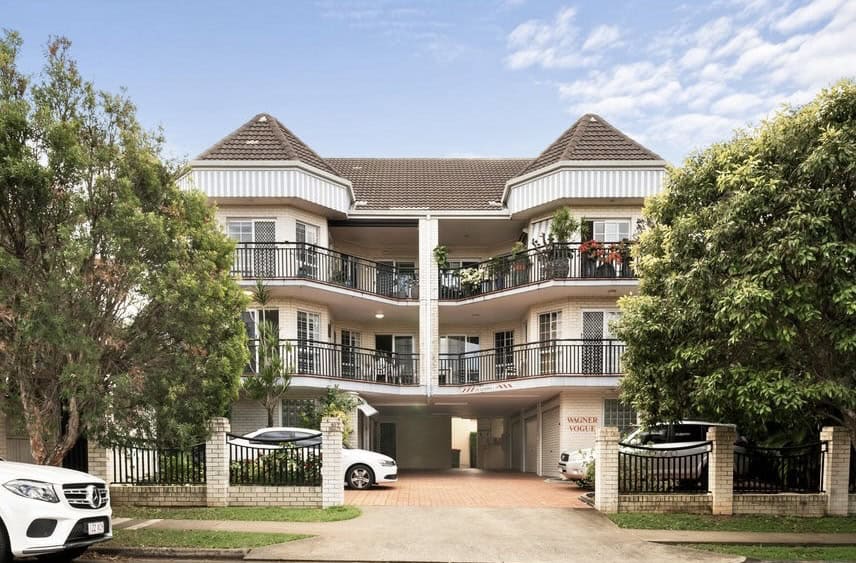
The median unit value was $872,403 in July 2026. Clayfield has a much larger unit market than many nearby prestige suburbs, with a wide range of two- and three-bedroom apartments. Age, internal size, position, body corporate costs, parking and renovation quality can all have a significant effect on value.
For example, 2/50 Wagner Road, Clayfield — a two-bedroom, two-bathroom apartment with one car space — sold for $880,000 on 28 July 2026.
Over the last 12 months (to July 2026) the median house value has increased by 11.2%, and the median unit is up 16.2%.
The longer-term change has been substantial. House values rose from $1,140,160 in July 2020 to $2,218,528 in July 2026, while unit values increased from $359,067 to $872,403. Units have performed particularly strongly in recent years, although results can vary considerably between complexes depending on building quality, body corporate costs and the attributes of the individual apartment.
Current indicators point to tight supply for both houses and units. Houses were taking around 48 days to sell and units around 22 days. Stock on market was about 0.71% for houses and 0.74% for units, while vacancy rates were approximately 0.78% and 0.41% respectively.
The house and unit markets still behave quite differently. Gross rental yield was around 2.25% for houses, reflecting Clayfield’s high land values and strong owner-occupier market, compared with about 3.8% for units. Vendor discount data was approximately -9% for houses and -4% for units.
These figures are useful as suburb-level indicators, but they should not be used to price an individual property.
**Statistics current for August 2026
Clayfield suits buyers who want an established inner-north location, good transport, access to well-regarded schools and a choice of both houses and apartments. It is also a suburb where property-specific research matters. Two homes only a few streets apart can have very different exposure to noise, flood or overland flow, character controls, renovation quality and usable land.
A buyers agent in Clayfield can help compare recent sales, identify property-specific risks and work out an appropriate buying and negotiation strategy before you commit. This is particularly useful in a suburb where street position and property condition can make such a large difference to value. You can also compare Clayfield with other areas in our Brisbane suburb profiles.
Find a better property at an even better price. Leave your property buying journey with our buyer’s agents – we’re Your Property Hounds.